

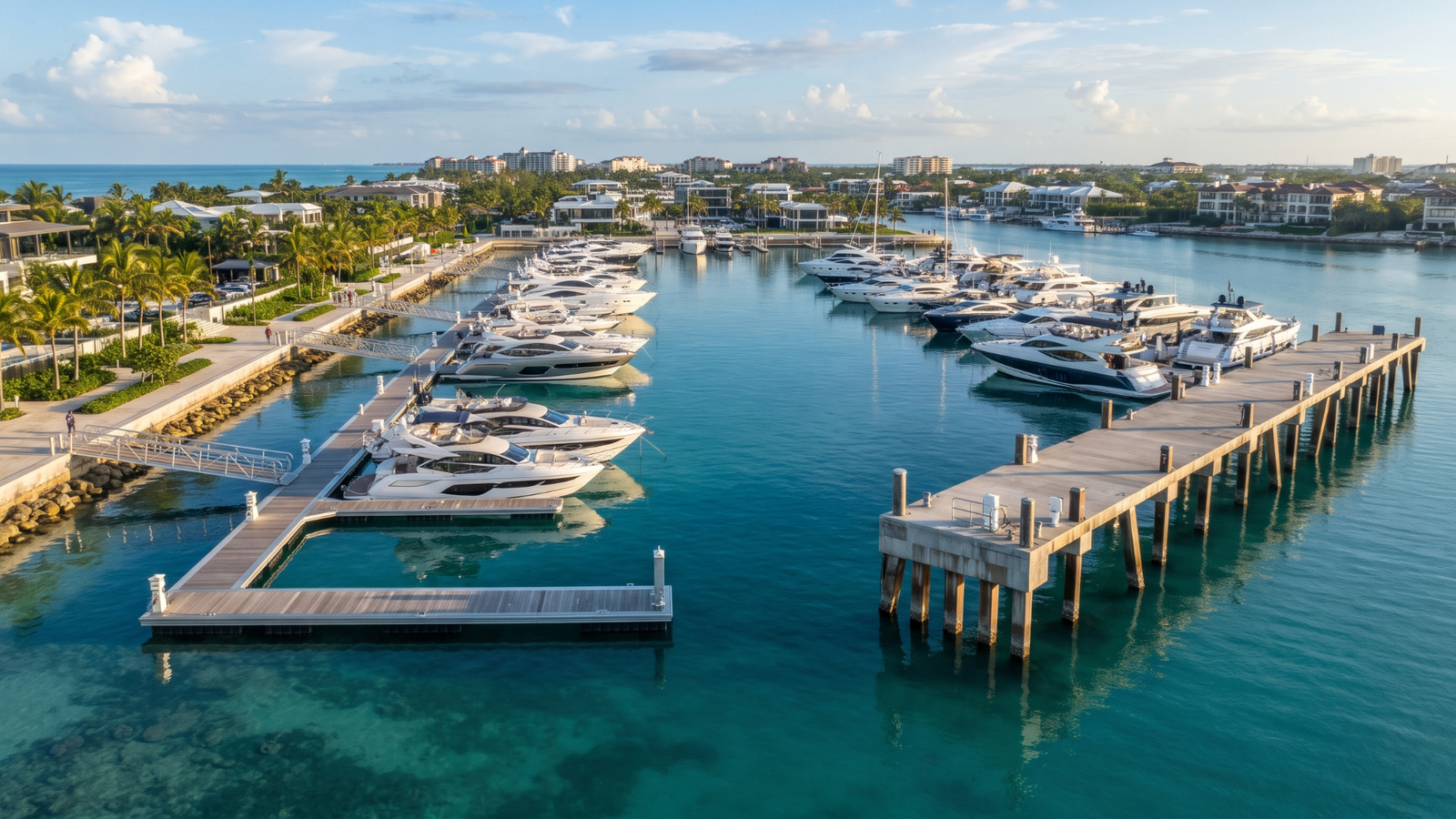
Selecting the right docking system is one of the most important decisions in any marina, waterfront, or marine infrastructure project. Both floating and fixed docks offer unique advantages, and the ideal choice depends on factors such as water conditions, vessel requirements, site characteristics, budget, and long-term operational goals.
Understanding the differences between these two systems can help property owners, marina developers, and project managers make informed decisions that maximize performance, safety, and return on investment.
Understanding Floating Docks
Floating docks are designed to rise and fall with changing water levels while remaining securely anchored. They automatically adapt to tides, waves, and seasonal fluctuations, providing consistent access to vessels throughout the year.
These systems are widely used in marinas, yacht clubs, residential waterfront developments, and recreational boating facilities where flexibility and accessibility are essential.
Advantages of Floating Docks
Adaptability to Water Level Changes
Floating docks automatically adjust to varying water conditions, maintaining functionality even in environments affected by tides, rainfall, or seasonal changes.
Improved Accessibility
Because the dock moves with the vessel, boarding and disembarking remain safer and more comfortable for boat owners and passengers.
Flexible Design Options
Floating systems can be configured in multiple layouts and expanded as operational requirements evolve.
Easier Expansion
Additional dock sections can often be added without major reconstruction, reducing disruption and future costs.
Modern Appearance
Floating docks create a clean, organized, and contemporary look that enhances the visual appeal of waterfront developments.
Ideal Applications for Floating Docks
- Marinas
- Yacht Clubs
- Residential Waterfront Communities
- Lakes and Reservoirs
- Recreational Boating Facilities
- Multi-Vessel Docking Areas
Understanding Fixed Docks
Fixed docks are permanently supported by piles or structural foundations installed into the seabed or shoreline. Unlike floating systems, their elevation does not change with water levels.
These structures are commonly selected for waterfront locations with minimal water fluctuation and applications requiring maximum structural stability.
Advantages of Fixed Docks
Exceptional Structural Stability
Fixed docks provide a solid and stable platform capable of supporting heavy loads and high levels of traffic.
Long-Term Reliability
When professionally engineered and constructed, fixed dock systems offer excellent durability and dependable performance.
Minimal Movement
The stationary design may be advantageous for applications where maximum stability is required.
Suitable for Specific Conditions
Locations with stable water levels often benefit from the simplicity and strength of fixed dock structures.
Ideal Applications for Fixed Docks
- Commercial Waterfront Facilities
- Industrial Marine Operations
- Public Piers
- Boardwalks
- Permanent Waterfront Structures
- Heavy-Use Marine Environments
Key Factors to Consider Before Choosing
Water Level Variations
If your location experiences significant tidal movement, fluctuating water levels, or seasonal variations, floating docks are often the most practical solution. In more stable environments, fixed docks may provide excellent results.
Vessel Requirements
Facilities serving multiple vessel types generally benefit from floating systems because they maintain consistent boarding heights and improve accessibility.
Budget Considerations
Initial construction costs, maintenance requirements, and long-term operational objectives should all be evaluated when comparing docking systems.
Site Conditions
Wave action, water depth, shoreline characteristics, currents, and soil conditions play a significant role in determining the most suitable solution.
Future Expansion Plans
If future growth or reconfiguration is anticipated, floating dock systems often provide superior flexibility and scalability.
Which Option Provides Greater Flexibility?
For many modern marina developments, floating docks offer exceptional versatility. Their ability to adapt to changing water conditions while maintaining user accessibility makes them a preferred choice for recreational, residential, and commercial marine applications.
However, flexibility is only one element of the decision-making process. Environmental conditions, structural requirements, and long-term project objectives should always guide the final selection.
The Importance of Professional Planning
Every waterfront development presents unique challenges and opportunities. Selecting between floating and fixed docks requires a thorough understanding of site conditions, vessel operations, regulatory requirements, and long-term performance goals.
Professional planning and engineering evaluation help ensure that the chosen solution delivers safety, efficiency, durability, and maximum value throughout the life of the project.
Conclusion
Both floating and fixed dock systems offer significant advantages when properly matched to the intended application. Floating docks excel in adaptability, accessibility, and scalability, while fixed docks provide outstanding stability and structural permanence.
By carefully evaluating environmental conditions, operational requirements, and future expansion plans, marina owners and developers can select the docking solution that best supports their long-term success and operational efficiency.